10 Signs of Childhood Emotional Neglect in Adults (And Why It Still Affects You Today)

Have you ever felt like something was missing growing up, but you couldn't quite put your finger on it?
Maybe your parents provided food, shelter, and opportunities. Maybe they worked hard and did the best they could. Yet somewhere deep inside, you still feel unseen, disconnected, or unsure of your own needs.
If this sounds familiar, you may have experienced childhood emotional neglect.
Unlike obvious forms of trauma, emotional neglect often happens quietly. It's not always about what happened to you. Sometimes it's about what didn't happen.
The comfort that wasn't offered.
The feelings that weren't acknowledged.
The emotional support that wasn't available when you needed it most.
Because emotional neglect can be difficult to recognize, many adults spend years wondering why they struggle with people-pleasing, perfectionism, self-doubt, or feeling disconnected from themselves.
Let's explore some common signs of childhood emotional neglect and how they can continue to show up in adulthood.
What Is Childhood Emotional Neglect?
Childhood emotional neglect occurs when a child's emotional needs are consistently overlooked, dismissed, minimized, or unsupported.
This doesn't necessarily mean parents were intentionally harmful. In many cases, caregivers were overwhelmed, emotionally unavailable, stressed, or simply lacked the emotional tools themselves.
A child learns about themselves through connection with others. When emotions are ignored or dismissed, children often learn:
My feelings don't matter.
My needs are a burden.
I shouldn't ask for help.
I need to handle everything myself.
Other people's needs are more important than mine.
Over time, these beliefs can become deeply rooted patterns that follow us into adulthood.

1. You Struggle to Identify What You're Feeling
One of the most common effects of emotional neglect is difficulty recognizing your own emotions.
You may regularly answer "I'm fine" because you genuinely don't know how you're feeling.
You might notice stress, tension, or overwhelm in your body, but struggle to put words to your emotions.
When feelings weren't welcomed or discussed during childhood, many adults never learned how to identify them.
2. You Put Everyone Else's Needs Before Your Own
Do you automatically focus on what everyone else wants before considering your own needs?
Many adults who experienced emotional neglect become experts at caring for others while ignoring their own needs.
Over time, self-sacrifice can become normal.
This pattern often overlaps with people-pleasing tendencies.
3. You Feel Guilty When You Need Help
Asking for support may feel uncomfortable, embarrassing, or even selfish.
You may tell yourself:
I should be able to handle this myself.
Other people have it worse.
I don't want to be a burden.
When emotional support wasn't consistently available growing up, many adults learn to rely only on themselves.

4. You Feel Disconnected From Yourself
Sometimes emotional neglect creates a feeling that something is missing.
You may struggle to answer questions like:
What do I want?
What do I enjoy?
What do I need right now?
Instead of developing a strong connection to yourself, you may have become highly attuned to everyone else's needs and expectations.
5. You Constantly Seek Validation
Many adults who experienced emotional neglect find themselves looking outside themselves for reassurance.
You may frequently wonder:
Am I doing enough?
Am I good enough?
Do they approve of me?
When emotional validation was limited during childhood, external validation can feel like the only way to feel secure.
6. You Are Extremely Independent
Independence is often celebrated, but sometimes extreme independence develops as a survival strategy.
You may struggle to trust others, delegate responsibilities, or allow people to support you.
Deep down, there may be a belief that no one will show up for you anyway.
7. You Feel Responsible for Other People's Emotions
Do you feel responsible for keeping everyone happy?
Many emotionally neglected children learned to monitor other people's moods in order to stay safe, avoid conflict, or maintain connection.
As adults, this can show up as:
Walking on eggshells
Overexplaining
Conflict avoidance
Taking responsibility for other people's feelings

8. You Struggle With Self-Compassion
You may find it easy to offer kindness to others while being incredibly hard on yourself.
Mistakes may trigger shame, criticism, or feelings of failure.
Without emotional nurturing in childhood, many adults develop an inner critic rather than an inner source of comfort.
9. You Feel Invisible or Unseen
One of the deepest wounds of emotional neglect is feeling unseen.
You may have learned to be the "easy child," the responsible one, or the helper.
Your needs may have quietly faded into the background.
Many women describe feeling invisible even in adulthood.
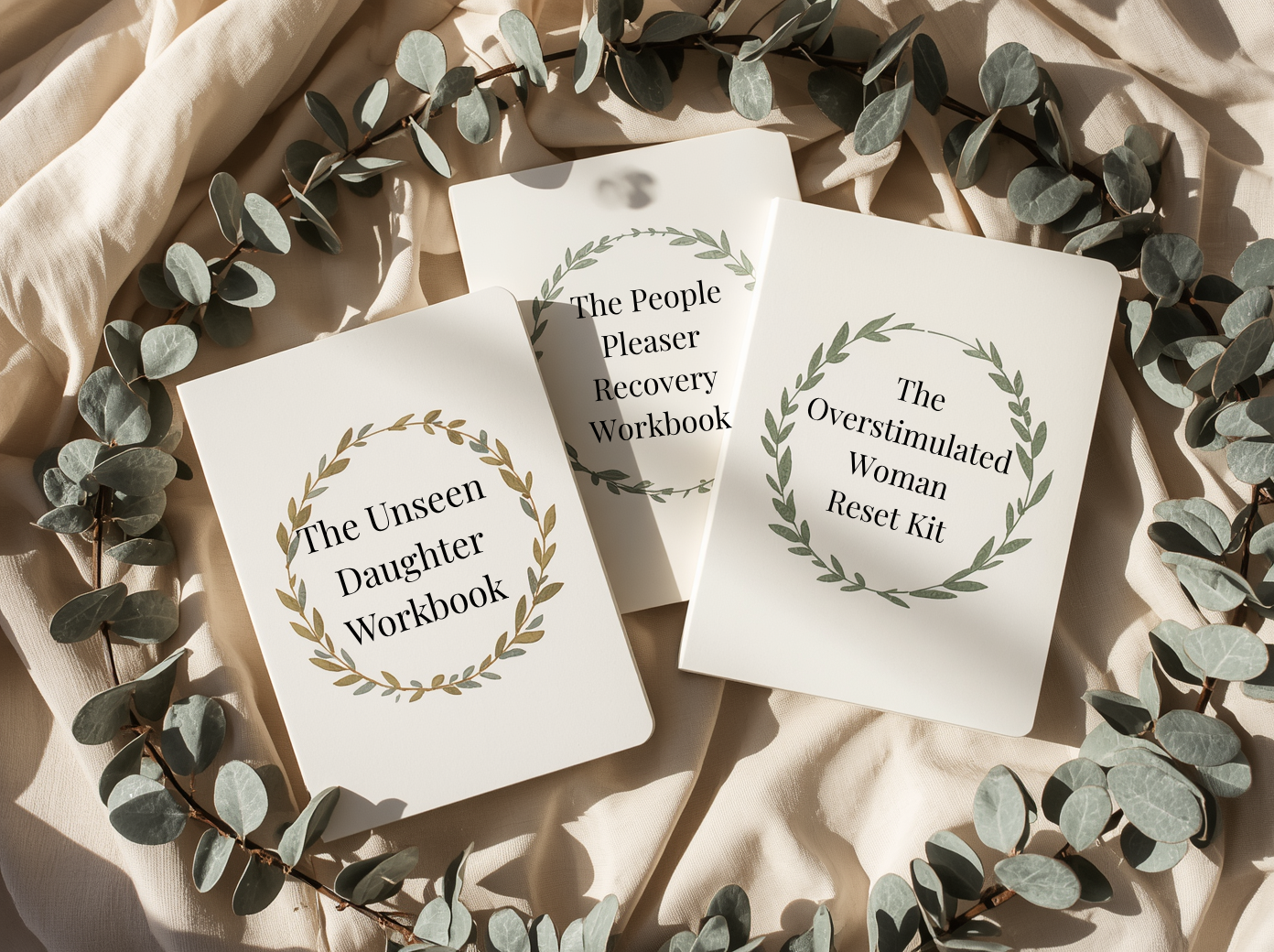
This experience is explored more deeply in The Unseen Daughter.
10. You Have Trouble Receiving Love and Care
Even when people genuinely care about you, receiving support may feel uncomfortable.
You might:
Downplay compliments
Push away help
Feel awkward receiving kindness
Question whether people truly care
When emotional care wasn't consistently available during childhood, receiving it later can feel unfamiliar.
The Good News: Awareness Creates Opportunity
Recognizing these patterns isn't about blaming parents or revisiting the past endlessly.
It's about understanding yourself with greater compassion.
Many of the habits that helped you survive childhood may no longer be serving you today.
Awareness creates the opportunity to make different choices.
Small choices.
Gentle choices.
Healing choices.
Over time, you can learn to:
Recognize your emotions
Honor your needs
Practice self-compassion
Build emotional safety
Develop a stronger connection with yourself
Healing doesn't require perfection. It begins with awareness.
A Gentle Next Step
If you're beginning to recognize yourself in these patterns, know that you're not alone.
Many women spend years wondering why they feel exhausted, disconnected, overwhelmed, or responsible for everyone else.
The answers often aren't found in trying harder.
They're found in learning to reconnect with the parts of yourself that may have gone unseen for a very long time.
If you're looking for gentle resources to support that journey, the Becoming Her Collection was created to help women reconnect with themselves through guided reflections, workbooks, and self-discovery practices.
You may also enjoy the Rooted Wellness Membership, which adds new healing resources, nervous system support tools, and emotional wellness practices regularly.
And if you'd like to start with a free resource, be sure to download my Healing Trauma with Essential Oils Guide.
Final Thoughts
Childhood emotional neglect often leaves invisible wounds.
Because nothing dramatic may have happened, many people question whether their experiences "count."
Your feelings matter.
Your experiences matter.
And the ways you've adapted make sense.
Healing isn't about becoming someone new.
It's about gently returning to the person you've always been underneath the coping strategies.
Disclaimer: This article is for educational and informational purposes only and is not intended to diagnose, treat, cure, or prevent any condition. It is not a substitute for professional medical, mental health, or therapeutic advice.
